Book Appointment Now
Skin Cancer & Melanoma Care
Skin cancer develops when abnormal cells grow uncontrollably in the skin. It can affect different areas of the body and may appear in various forms, including changes to existing skin marks or the development of new growths.
Recognising unusual skin changes and seeking timely medical assessment can help determine whether further investigation is necessary. Summit Oncology Clinic provides a point of contact for individuals seeking information about skin cancer and melanoma care in Meru, including consultation arrangements and appropriate care pathways.

What is Skin Cancer and Melanoma?
Skin cancer occurs when cells in the skin begin to grow abnormally. Main types include basal cell carcinoma, squamous cell carcinoma, and melanoma. Cancers differ in how they develop, their potential to spread, and the treatment they may require.
Basal cell carcinoma: The most common type of skin cancer. It often develops on areas exposed to sunlight and may appear as a persistent sore, raised growth, or unusual skin lesion.
Squamous cell carcinoma: Develops in squamous cells of the skin and may appear as a scaly patch, firm growth, or sore that does not heal.
Melanoma: Develops from melanocytes, the cells responsible for producing skin pigment. Although less common than the other major types, melanoma can spread to other parts of the body and requires prompt assessment.
Skin cancer can occur in people with different skin tones and may develop on areas that receive little direct sunlight. Risk factors vary by cancer type and may include ultraviolet radiation exposure, a history of certain skin lesions, and other individual factors. Possible warning signs include a new or changing mole, a growth that does not heal, a persistent skin sore, or a lesion that changes in colour, size, shape, or texture. Not every unusual skin change is cancerous, but changes that persist or progress should be evaluated by a healthcare professional.
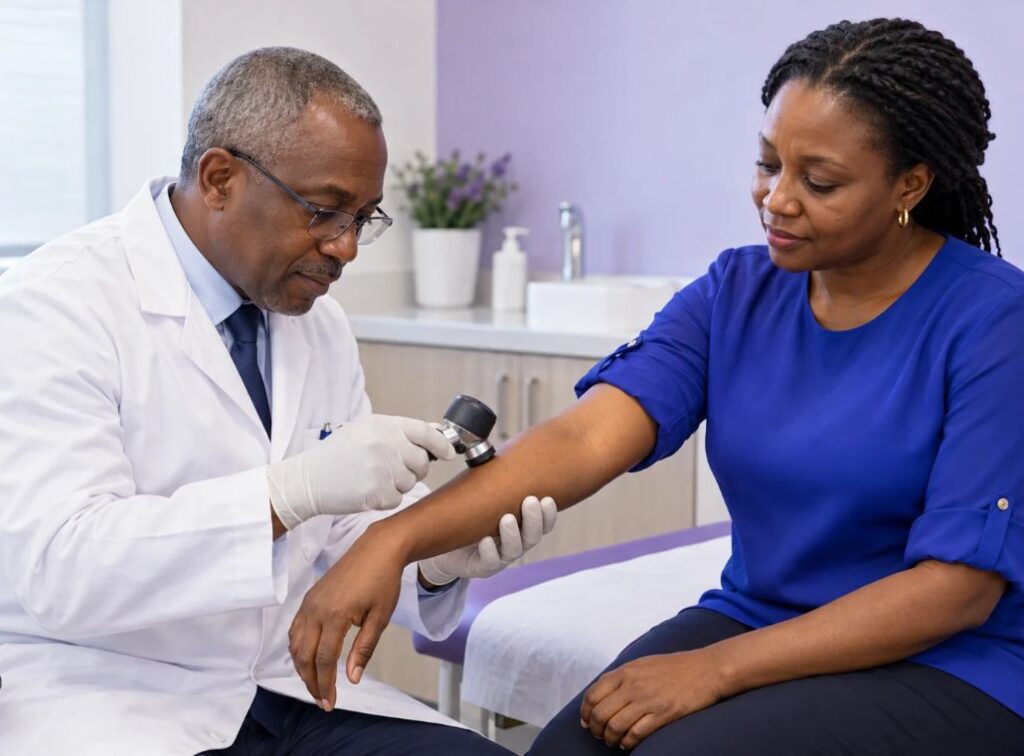
Signs & Symptoms of Skin Cancer
Changes in the skin are not always cancerous, but new or unusual growths and changes in existing moles should be assessed by a qualified healthcare professional.
Warning signs may include:
New mole or unusual skin growth.
A mole that changes in size, shape or colour.
Irregular mole border or uneven colouring.
A sore that does not heal or repeatedly bleeds.
Rough, scaly or crusted patch that persists.
A lump that grows, becomes painful or develops an open sore.
Persistent itching, tenderness or changes in a pigmented area.
The ABCDE guide can help identify changes in moles that need assessment:
A — Asymmetry: One half looks different from the other.
B — Border: The edges are irregular or uneven.
C — Colour: Mole has different or uneven colours.
D — Diameter: The spot is growing or becoming larger.
E — Evolving: Its appearance, size, shape or feel changes over time.
Not every melanoma shows all these features, and skin cancer can look different on different skin tones. Seek medical assessment for a concerning change rather than relying on appearance alone.
Assessment & Treatment
Assessment of a suspicious skin lesion begins with a review of its appearance, how changes occur over time, and relevant medical history. A healthcare professional will examine the skin and recommend a biopsy, in which we will collect a tissue sample for laboratory examination, if it indicates.
If there is confirmation of skin cancer, further assessment may be needed depending on the cancer type, its size, location, and other characteristics. For melanoma, the depth of the tumour and whether the cancer has spread can influence treatment decisions.
Treatment depends on the type and extent of the cancer. Options may include surgical removal, specialised skin procedures, radiation therapy, or other treatments where appropriate. Some advanced skin cancers may be treated with immunotherapy or targeted therapy, depending on the diagnosis and relevant clinical findings.
The most suitable treatment plan should be determined by qualified healthcare professionals following appropriate assessment. Patients may also require follow-up appointments to monitor recovery, check for recurrence, and identify any new suspicious skin changes.

Get the Right Guidance for Your Skin Health
Noticed a changing mole, an unusual skin lesion, or a sore that does not heal? Seeking medical advice can help you understand the cause and determine whether further assessment is needed. At Summit Oncology Clinic, we encourage anyone concerned about skin changes or a skin cancer diagnosis to enquire about appropriate care and available consultation options.